For decades, the broadcasting industry relied on a rigid but predictable foundation: SDI cables for local routing and expensive satellite transponders (DVB-S/S2) or dedicated fiber lines for long-haul contribution. While these traditional methods guaranteed pristine video delivery, they came with immense structural costs and operational inflexibility.
As the industry migrates toward IP-based infrastructures and remote cloud workflows, a major challenge has emerged: How do we deliver broadcast-grade, low-latency video over unpredictable public networks without losing a single frame?
The answer to this multi-million dollar question is SRT (Secure Reliable Transport). Originally developed by Haivision and now open-source, SRT has become the ultimate bridge connecting legacy broadcast reliability with the agility of the internet age.
The Core Problem of Public Networks: TCP vs. UDP
To understand why SRT is a game-changer for master control rooms (MCR) and live distribution pipelines, we must first look at the inherent flaws of standard internet protocols:
TCP (Transmission Control Protocol): Highly reliable because it acknowledges every packet sent. If a packet is lost, it stops the entire stream to request a retransmission. In live broadcasting, this causes catastrophic buffering, making TCP completely unusable for real-time video delivery.
UDP (User Datagram Protocol): Incredibly fast and low-latency because it fires packets continuously without waiting for receipts. However, UDP has zero error recovery. If the public internet encounters jitter or packet loss, your screen immediately suffers from macroblocking, pixelation, or total signal drops.

Enter SRT: The Best of Both Worlds
SRT acts as an intelligent wrapper around UDP. It leverages the raw speed and low-overhead nature of UDP while injecting a highly sophisticated, content-aware error correction mechanism.
Here are the technical pillars that make SRT the modern gold standard for contribution and distribution:
1. Intelligent ARQ (Automatic Repeat reQuest)
Instead of stopping the entire stream like TCP when a packet goes missing, SRT uses a high-speed, selective retransmission mechanism. It calculates the exact Round Trip Time (RTT) between the sender and receiver. If a packet is dropped due to a network spike, the receiver instantly requests only that specific missing packet, resolving the issue long before it can impact the active playout frame.
2. Adaptive Latency and Jitter Buffering
Public networks are plagued by “jitter”—the unpredictable variation in packet arrival times. SRT solves this by allowing engineers to configure a precise latency buffer (measured in milliseconds). SRT analyzes the network’s health in real-time, smooths out the arrival cadence of the packets, and reconstructs the exact original timing of the video stream. The result? A pristine, jitter-free feed delivered with a fixed, ultra-low latency.
3. AES-128/256 End-to-End Encryption
In an era where premium content security is paramount, SRT provides built-in, broadcast-grade AES encryption. Whether you are routing a high-stakes live sports feed or syndicating a premium 24/7 channel across global syndicates, your stream remains completely secure from intercept or unauthorized access without requiring complex VPN overlays.
Operational Modes: Caller, Listener, and Rendezvous
One of SRT’s greatest practical advantages in day-to-day MCR operations is its deployment flexibility. Unlike legacy protocols that require complex firewall configurations on both ends, SRT operates using three distinct handshaking modes:
| SRT Mode | Operational Function | MCR Use-Case |
| Listener | Waits for an incoming connection request on a specific network port. | A central playout server or MCR receiver awaiting external feeds. |
| Caller | Initiates the connection to a specific remote IP and port. | Remote production units or field encoders pushing video to the studio. |
| Rendezvous | Both sides attempt to connect to each other simultaneously. | Navigating complex, highly restrictive corporate firewalls without IT intervention. |

Why SRT is Essential for the Future of Playout
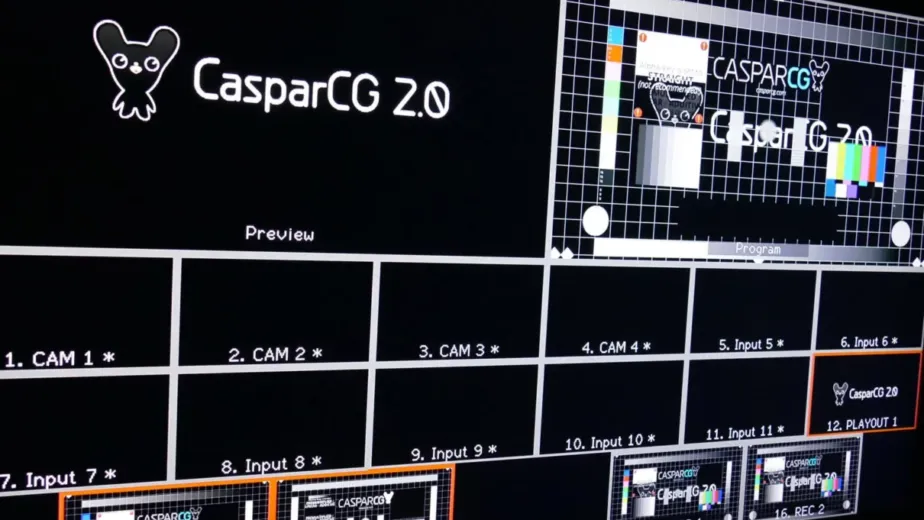
As we push for higher efficiencies—maximizing our benefit per frame—SRT eliminates the massive overhead of satellite distribution. It allows local and global broadcasters to deploy decentralized, software-defined playout architectures (such as custom macOS/Linux playout automation clients controlling CasparCG or SRT gateway nodes).
With SRT, a public broadband connection becomes a reliable, broadcast-grade pipeline. You can seamlessly switch between live multi-cam inputs located thousands of miles away, feed cloud-based vision mixers, or deliver localized channels to IPTV and OTT headends globally—all at a fraction of the cost of traditional transponders.
Conclusion
SRT is no longer just an emerging protocol; it is the infrastructure that makes modern, agile broadcasting possible. By mastering the chaos of public IP networks, SRT ensures that broadcasters don’t have to choose between financial efficiency and absolute on-air reliability. It is the definitive bridge ensuring our industry can continue capturing every angle of life, flawlessly, frame by frame.